Islington Council parking permits for removal vans explained
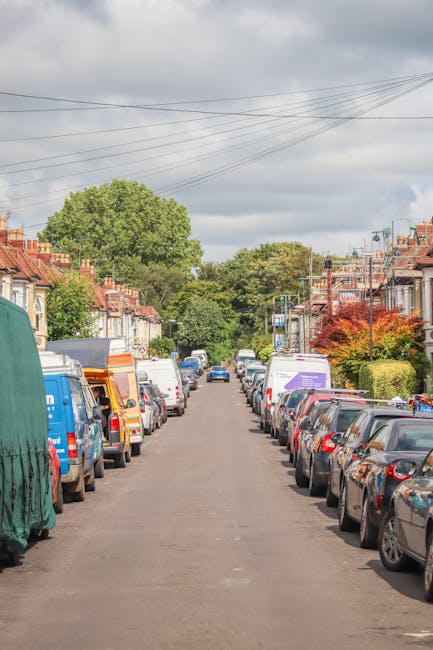
Moving day in Islington can feel straightforward right up until you meet the kerb. A narrow street, a bay that is already full, a yellow line that seems to appear from nowhere, and suddenly the whole plan depends on where the van can stop. That is why Islington Council parking permits for removal vans explained matters so much: it is less about paperwork for the sake of it, and more about making sure your move actually runs on time.
If you are planning a flat move, a house move, or even a same-day job, the parking side is often the bit people leave too late. Truth be told, that is where the stress starts. In this guide, we will break down what a removal van permit is, why it matters in Islington, how the process usually works, and what to do if your building, street layout, or timing makes things awkward. We will also cover practical moving-day tips, common mistakes, and the kind of planning that makes a cramped London street feel a little less hostile.
Why Islington Council parking permits for removal vans explained matters
In a borough like Islington, parking is not just a convenience issue. It can affect loading time, crew safety, customer stress, building access, and whether the move finishes in one trip or turns into a messy second round. A van parked badly can block traffic, upset neighbours, or force movers to carry furniture much further than planned. That sounds small on paper. On a wet Monday morning with a sofa to move down three flights of stairs, it is not small at all.
Removal van parking arrangements matter because they shape the whole flow of the day. If the vehicle can stop close to the entrance, everything becomes easier: the movers work faster, heavy items spend less time outside, and the risk of damage drops. If the van has to circle the block for 20 minutes, you lose momentum before the first box is even lifted. That is especially true around tighter residential streets, estates, and busy high-road areas where space disappears quickly.
There is also the compliance side. Councils manage parking differently from private landowners, and moving vans are not automatically treated the same way as a normal car. In practice, you need to think about bay suspension, waiting restrictions, loading exemptions, access routes, and building-specific rules together. Miss one piece, and the whole puzzle can wobble.
Expert summary: the real job of a parking permit is not to make life bureaucratic. It is to give your removal team a safe, legal, predictable place to work so the move stays controlled from start to finish.
If you are also planning the rest of the move, it helps to read how to create a packing plan for moving homes and stress-free transition strategies. Parking is one part of a bigger moving system, not a separate headache to solve on the day.
How Islington Council parking permits for removal vans explained works
The basic idea is simple: if a removal van needs to stop in a restricted or controlled parking area, you may need permission or an arrangement that makes the stop lawful. In Islington, the exact setup depends on the street, the sign, the bay type, and the timing. Some locations allow loading and unloading for a limited period. Others require a specific parking permission or a bay suspension. And some streets are so tight that you need to plan as if there is no room to improvise, because there often isn't.
Here is the plain-English version. First, identify where the van will stop. Then work out whether that space is unrestricted, controlled, permit-only, loading-only, or subject to waiting restrictions. After that, confirm whether your removal activity fits the local rules. A removals team may be able to load or unload in a restricted bay for a short time, but that does not mean they can simply park anywhere and hope for the best. Councils tend not to love "hope for the best". Fair enough, really.
It is also worth distinguishing between a parking permit and a bay suspension, because people often mix them up. A permit usually relates to who may use a space under certain conditions. A bay suspension can temporarily reserve a space or prevent normal parking so a removal van can work there. Which one applies will depend on the street layout and the council's parking controls. In some moves, no special arrangement is needed at all. In others, it is the difference between a smooth move and a long, awkward shuffle.
Timing matters as well. If your move starts early, ends late, or lands on a busy weekday when kerb space is under pressure, you may need to be more proactive. A van that arrives without a workable stopping point can create a domino effect: delays, extra carrying distance, and pressure on lifting teams. That is why the parking conversation should happen before boxes are sealed, not after the kettle has already been unplugged.
Key benefits and practical advantages
Getting the parking side right has benefits that go well beyond avoiding a ticket. The biggest advantage is time. When the van can work close to the property, loading and unloading become far more efficient. That matters if you are moving from a top-floor flat, a building with a narrow staircase, or a property with a lift that is tiny, slow, or out of action. Every extra step counts.
Another benefit is safety. Heavy items should not be carried unnecessarily far, especially through busy pavements or around awkward kerbs. Shorter carry distances reduce the chance of slips, grazes, and damage to furniture. If you are moving anything bulky, it is worth brushing up on heavy lifting basics and better kinetic lifting techniques so you understand what a well-managed load should look like.
There is a financial angle too, even if nobody likes saying it out loud. Delays can mean longer labour time, extra waiting, or the need for a second vehicle move. You may also avoid the hassle of penalties, though the exact risk depends on where the van is parked and what restrictions apply. One carefully planned stop can save a surprising amount of stress.
For customers, the benefit is emotional as much as practical. A move already pulls at your attention. You are thinking about keys, deposits, neighbours, the missing charger, and whether the dog will hide under the bed. Parking should not be another mystery. When it is sorted, the day feels calmer. Not perfect, but calmer. That counts.
- Less carrying distance: quicker, safer loading and unloading.
- Lower risk of disruption: fewer delays from circling for space.
- Better building access: easier coordination with lifts, entrances, and stairwells.
- Reduced moving-day friction: fewer arguments with neighbours or traffic wardens.
- More predictable timing: useful for chain moves and same-day handovers.
Who this is for and when it makes sense
This is relevant to almost anyone moving in Islington, but it becomes especially important for people in flats, terraces with limited frontage, converted buildings, and streets where parking is already under pressure. If you are moving a sofa, a bed, white goods, office furniture, or awkward items like a piano, parking control becomes part of the job, not an admin afterthought. If you are moving student items, too, the volume may be smaller but the access can still be fiddly. A smaller move can still get blocked by the same street restrictions.
It also makes sense when your property has poor loading access. Maybe there is no driveway. Maybe the nearest legal space is around the corner. Maybe the building entrance is on a busy road with no safe place to stop for long. In those cases, it is often smarter to treat parking planning as essential rather than optional. That is one reason local moving knowledge matters. A team familiar with access and lift strategies near Kings Cross N1C or Caledonian Road staircase moving solutions will usually spot parking pressure much earlier.
For larger or more sensitive moves, the issue becomes even sharper. House removals, flat removals, office relocations, piano moves, and same-day removals all place different demands on the kerbside. A one-bedroom flat move with a man and van setup may only need a brief stop. An office move may need a much longer loading window and a clearer plan for materials, trolleys, and repeated trips. One size does not fit all here. Wouldn't that be lovely? Sadly, no.
It is also relevant if you are trying to do other moving tasks at the same time, like packing, cleaning, or decluttering. The more jobs you stack onto a single day, the more important it is to remove avoidable friction. A good start is to declutter before you move and follow a solid pre-move cleaning routine. That way, parking is one less thing fighting for your attention.
Step-by-step guidance
Here is a sensible way to approach it without turning the whole thing into a full-time project.
- Check the street conditions first. Look at the road outside the property and note whether it is permit-only, pay-and-display, loading-only, or marked with waiting restrictions. If you are unsure, do not assume the van can simply stop there.
- Work out the van size and loading time. A small van, a larger removal vehicle, and a specialist vehicle do not have the same parking footprint. The longer the loading window, the more careful the parking plan needs to be.
- Match the plan to the property access. Think about stairs, lifts, narrow halls, and where large items will be turned or staged. If the route from van to door is awkward, parking becomes even more important.
- Speak to the relevant parking contact early. In many moves, this is the stage where people lose time by waiting too long. If a permit, suspension, or special arrangement is needed, get clarity early enough to avoid last-minute scrambling.
- Confirm the loading/unloading point with the mover. Your removal team should know exactly where the van can stop and how long they have. A shared plan avoids that awkward moment where everyone points in different directions.
- Build in a backup. If the preferred bay is taken, what is plan B? Is there a legal alternative a short walk away? Can the van arrive slightly earlier? A backup route matters more than people think.
- Keep documents and instructions handy. If you have any confirmation, reference details, or timing notes, keep them easy to reach. Nobody wants to be digging through a box labelled "miscellaneous wires" at 8:10 in the morning.
A practical moving checklist helps here too. If you are still shaping the overall move, take a look at planning your packing process and reducing moving-day stress. Parking, packing, and access all feed into each other.
Expert tips for better results
One of the best things you can do is think like a mover, not just like a resident. That means looking at the street as a worksite for the day. Where will the doors open? Where will trolleys turn? Can a van door fully swing without catching another parked vehicle? These details sound fussy until you are trying to move a mattress in the rain.
Another useful habit is to confirm access around the building, not only the parking outside. A permit is no use if a delivery bay is blocked by bins, a coded gate is unavailable, or the lift is too small for your largest item. In that situation, parking is only half the story. If you are moving large pieces of furniture, it helps to review bed and mattress moving advice and, if relevant, when piano moves need specialist help.
Try to keep your timing tight but realistic. A van arriving too early may end up waiting. A van arriving too late may lose the best parking option. Somewhere in the middle is usually the sweet spot. That is obvious, yes, but on moving day obvious things are often the first to go missing.
Finally, communicate in short, direct messages. If you are coordinating with a mover, building manager, or landlord, avoid vague phrases like "somewhere outside should be fine". Better to say, "The van can use the loading bay on the north side for 30 minutes" or "There is a legal stop five doors down, but the pavement is narrow." Specific beats hopeful every time.
Common mistakes to avoid
The most common mistake is leaving it too late. People pack the final box, lock the front door, and only then realise there is nowhere legal for the van to stop. By that stage, the pressure is already on and everyone becomes a little less patient. That is when small issues feel huge.
Another mistake is confusing "temporary stopping" with "free parking". Loading and unloading allowances, where they exist, still have limits. A van cannot automatically sit wherever it likes just because furniture is being moved. Assume nothing. Read the street conditions carefully and keep expectations realistic.
A third mistake is forgetting about the size of the vehicle. A bay that works for a car may be awkward for a removal van, especially if there are corners, tight approaches, or traffic humps. Bigger vehicle, bigger consequences. Simple as that.
People also underestimate how many items need to go out in one burst. A single wardrobe is one thing. A wardrobe, bed frame, mattress, boxes, a mirror, and a few "oh, can that go too?" extras is another. If you are not clear about what is travelling, the parking window can quietly disappear while the team shuttles between rooms. For bulky items, a useful companion read is bulky waste and large-item exclusions for Pentonville moves.
- Leaving parking decisions until the day of the move.
- Assuming loading rules are the same everywhere.
- Not checking whether a bay is too small or too busy for a van.
- Ignoring access problems at the building entrance.
- Failing to build in a backup plan if the preferred space is occupied.
Tools, resources and recommendations
You do not need a suitcase full of software to manage this properly. A good moving plan, a sensible phone notes app, and a simple street check are often enough. Still, there are a few practical tools and habits that make life easier.
Start with a written timeline. Include when the van arrives, when keys are expected, and when the main loading phase should begin. Even a rough timeline helps spot conflicts before they become real problems. If you are juggling a move and storage at the same time, storage planning for larger items can help you avoid cramming everything into one rushed day.
Use photos wisely. A quick photo of the road outside, the bay markings, or the building entrance can save a lot of back-and-forth later. It is one of those tiny habits that feels unnecessary until it saves you ten minutes of confusion.
Keep movement paths clear inside the property. Boxes, rolls of tape, and random bin bags can block the flow between the door and the van. If you are preparing several rooms at once, that bottleneck matters. A cleaner exit path can be just as helpful as a better parking spot.
Choose movers who understand local access. A local team can often spot street-level issues early and adjust loading strategy around them. That may mean using a smaller vehicle, staggering the load, or reshaping the arrival time. If you are comparing service levels, our services overview is a sensible place to start, especially if your move needs a little more than a standard van-and-driver approach.
Keep support pages close to hand. If you want to understand how a move is priced, pricing and quotes may be useful. For payment reassurance, payment and security can give you a clearer idea of what to expect. Those matters are not glamorous, granted, but they are part of a tidy moving experience.
Law, compliance, standards, or best practice
With parking and loading in Islington, the safest approach is to treat the council rules as the baseline and not rely on habit. Local parking restrictions can change from street to street, and what looks fine at a glance may not be allowed for a van at the time you need it. Because of that, compliance is mostly about checking carefully, planning early, and not pushing assumptions too far.
Best practice usually means three things. First, you verify the parking situation before moving day. Second, you make sure the van size and loading duration match the space available. Third, you keep the whole plan consistent with building access, traffic conditions, and any restrictions around waiting or stopping. It sounds technical when written out, but in real life it just means being organised. Very organised, if the street is tight.
For removals work more generally, safety and care should stay central. That includes safe lifting, sensible team coordination, and reducing unnecessary carries across roads or pavements. If you want a broader sense of the standards behind our working approach, health and safety policy, insurance and safety, and recycling and sustainability would usually be the kinds of company commitments readers look for. However, because parking rules can vary, it is still wise to confirm the exact arrangements for your street rather than rely on general guidance alone.
One last point: if something feels unclear, pause and ask. Moving quickly is good. Moving blindly is not. No one wins a prize for bravado on a busy London road.
Options, methods, or comparison table
There are usually a few ways to handle removal-van parking in Islington, and the best one depends on the street and the scale of the move. Here is a simple comparison to help you think it through.
| Method | Best for | Advantages | Watch-outs |
|---|---|---|---|
| Unrestricted stop nearby | Very short local moves with low street pressure | Fast, simple, usually no special arrangement needed | Not always available in busy residential streets |
| Loading/unloading bay | Moves with clear, short-term access | Close to the door, efficient for heavy items | Time limits and bay availability can be tight |
| Permit or bay arrangement | Properties in controlled parking areas | More predictable access if approved in advance | Requires planning and confirmation ahead of time |
| Remote legal stop plus carry | Awkward streets or blocked frontage | Still workable when kerb space is limited | Slower, physically tougher, more prone to delays |
In practice, many removals end up using a mix of these methods. A van may use a bay for the heaviest items and then move a short distance if needed. That flexibility is useful, but only if the plan is clear. If you are dealing with a particularly awkward property layout, you may also find tight corridor solutions for Victorian staircases in N1 helpful, because access challenges and parking challenges often arrive as a pair.
Case study or real-world example
Picture a second-floor flat move near a busy Islington street on a Friday morning. The furniture includes a bed, a wardrobe, several boxes, and a sofa that looked smaller in the lounge than it does in the hallway. The street has limited parking, and the building entrance sits just off a narrow pavement. Nothing dramatic, just the kind of ordinary London setup that can become annoying very quickly if nobody has thought about kerbside access.
In a case like this, the mover would usually check whether a nearby bay can be used for loading, confirm how long the vehicle can remain in place, and decide whether the van should arrive before the street gets busier. The team might also stage some items near the door so the load is ready when the space opens up. That reduces wasted minutes. And once the van is in place, the crew can work through the bulky items first instead of hunting for spaces between random box runs.
Now add one little complication: the lift is slow, and the stairs are tight. Suddenly, parking becomes even more important because every extra metre from the van to the door becomes noticeable. The lesson is simple. The more awkward the building, the more your parking plan needs to be nailed down. Not perfect, just nailed down well enough that everyone can keep moving.
If you are moving on a similar timescale, same-day support can make a big difference. You might want to look at same-day removals for urgent flat moves or man with a van support in Pentonville if your job is smaller and speed matters more than a full-scale service. The right setup depends on your volume, your access, and how much parking pressure there is outside.
Practical checklist
Use this as a simple pre-move sanity check. It is not fancy, but it works.
- Confirm the exact move date and expected arrival time.
- Check whether the street is controlled, restricted, or permit-only.
- Identify the nearest legal loading or stopping option.
- Match the van size to the space available outside the property.
- Confirm access details for the building entrance and lift, if there is one.
- Keep key items and documents easy to reach on moving day.
- Prepare a backup plan if the preferred space is occupied.
- Make sure bulky items are loaded first if timing is tight.
- Clear hallways, stairwells, and door thresholds before the team arrives.
- Double-check any parking instructions the day before the move.
One final practical note: if you are also sorting boxes and supplies, packing and boxes in Pentonville may help you get the prep side in order before the vehicle arrives. Little wins matter. They really do.
Get a free quote today and see how much you can save.
Conclusion
Islington Council parking permits for removal vans explained in plain language come down to this: plan the parking before the van arrives, match the vehicle to the street, and treat access as part of the moving job rather than a side issue. When you do that, the whole day becomes easier. The crew works faster, the furniture moves more safely, and you avoid that horrible late-stage scramble where everyone is carrying boxes and nobody knows where the van should be.
If your move is in a tight street or a busy part of the borough, do not leave the parking question hanging. Check it early, keep your plan realistic, and allow a little breathing room for the unexpected. That small bit of care can change the mood of the entire move. And honestly, moving day needs all the calm it can get.
Take it one step at a time. The street will not be the easiest part, but it can be the manageable part.
Frequently Asked Questions
Do I always need a parking permit for a removal van in Islington?
Not always. It depends on the street, the type of bay, the local parking restrictions, and how long the van needs to stop. Some moves can use an existing loading area or legal stopping point, while others need advance permission.
What is the difference between a parking permit and a bay suspension?
A parking permit usually allows a vehicle to park under certain conditions. A bay suspension is more like temporarily reserving or removing normal parking use from a space. For removals, the right option depends on the exact street setup and access needs.
Can a removal van load or unload on double yellow lines?
Sometimes loading and unloading may be permitted for a short period, but this is not something to guess at. The rules depend on the location, signage, and current restrictions. It is always safer to confirm the specific situation before the move.
How far in advance should I sort parking for a move?
As early as you can. The more controlled the street is, the more important early planning becomes. For busy London streets, leaving it until the day before is usually risky, and leaving it until the day itself is a bit too adventurous.
What if the parking space outside my flat is already taken?
That is where a backup plan matters. You may need a nearby legal loading point, a different arrival time, or a different vehicle arrangement. A good mover will usually think through this before the day begins.
Are parking rules different for flat moves and house moves?
The rules can be the same, but the pressure on the space is often different. Flat moves usually need closer kerb access because stairs, lifts, and hallways slow the process. House moves may have more frontage, but that is not guaranteed in Islington.
Do larger vans need more careful parking planning?
Yes, because larger vans take up more space and can be harder to position safely in tight streets. If the road is narrow or busy, the size of the vehicle can make a big difference to whether loading feels smooth or awkward.
What should I tell my removal company about parking?
Tell them the street layout, the likely stopping point, any known restrictions, building access details, and whether there are lifts, stairs, or gates to consider. Clear details help the team plan better and reduce last-minute surprises.
Can I sort the parking myself instead of asking the mover?
You can help with the information, yes, but the actual handling of parking arrangements is often easiest when the mover is involved too. They will know what vehicle they are bringing and how much time they need on-site.
Does parking affect the cost of a removal?
It can, indirectly. If parking is difficult, loading can take longer and the job may need more coordination. The exact effect depends on the move, so it is best to ask for a clear quote rather than assume.
What happens if parking and access are both difficult?
Then the move needs a tighter plan. Parking, lift access, stair width, and carry distance all need to be considered together. In those situations, local experience and careful timing become especially valuable.
Is it worth planning parking even for a small move?
Yes. Small moves can still be delayed by a bad stopping point, and sometimes they are even more vulnerable because people assume they will be quick. A few boxes and a sofa can still cause a traffic problem if the van cannot stop properly.