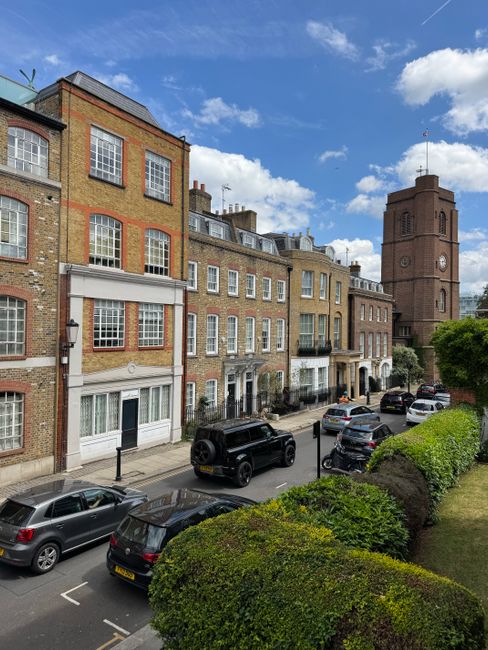
Compare hourly vs fixed-price moves in Pentonville: which pricing model suits your move?
If you are planning a move in Pentonville, the first big decision is often not the van size or the packing boxes. It is the pricing model. Should you book by the hour, or choose a fixed-price move? The answer depends on how much you are moving, how predictable the day looks, and how much risk you are willing to carry if the job runs long. In a busy London area like Pentonville, where parking, access, and timing can all change the shape of a move, this choice matters more than most people expect.
This guide breaks down Compare hourly vs fixed-price moves in Pentonville in plain English. You will see how each option works, where the hidden costs can creep in, who each model tends to suit, and how to make a calm, sensible choice. To make things easier, we will also point you towards a few useful service pages, including pricing and quotes, man with van, and house removals if you are comparing practical options as you read.
Let's face it, moving day is already busy enough. The pricing should not be a mystery on top of the boxes, the kettle, and that one drawer full of random cables nobody ever wants to deal with.
Why Compare hourly vs fixed-price moves in Pentonville Matters
Pricing affects more than your invoice. It shapes how you plan the move, how tightly you pack the schedule, and how much stress you carry into the day. In Pentonville, where streets can be tight and access is not always straightforward, the wrong pricing model can turn a reasonably simple removal into a slow, expensive afternoon.
An hourly move is usually based on how long the team is working. A fixed-price move is an agreed total for the job, usually based on what needs moving, access conditions, distance, and any extra services you need. Both can be perfectly fair. The key is knowing which one matches your situation.
For example, if you are moving from a small flat near a main road with straightforward access and only a few pieces of furniture, an hourly booking may work well. If you are moving a whole household, need packing help, or have stairs, lift restrictions, or awkward parking, a fixed quote may give you more peace of mind. One model is not automatically cheaper. The better question is: which one is more predictable for your move?
If you are still weighing up service types, it can help to look at the broader options available through removal services and removal company pages, because the pricing model often sits inside the service style itself.
How Compare hourly vs fixed-price moves in Pentonville Works
Hourly pricing is simple on the surface. You pay for the time used, usually from arrival to completion, sometimes with a minimum booking window. If the job is quick and well prepared, this can be efficient. If there are delays, you pay for them too. That is the trade-off.
Fixed-price pricing is built differently. The provider estimates the full job in advance and agrees a total. That figure usually reflects the volume of goods, number of crew members, access conditions, and the likelihood of delays. If the move takes a bit longer than expected, the price generally stays the same, provided the scope has not changed. That is why fixed pricing feels calmer for many people.
In Pentonville, local conditions can push the balance one way or another. A move that looks quick on paper can stretch out if the van needs to park further away, if there are narrow stairwells, or if you are moving at a time when the street is busy. Equally, a small move with good access can be handled neatly by the hour and done before lunch. Timing matters too. A morning move may be easier than trying to squeeze everything in after work when the roads are already busier. Simple truth, really.
Most decent providers will ask questions before giving a price: what you are moving, how many rooms, whether there is lift access, where the van can stop, and whether you need packing or dismantling help. If they do not ask much at all, that is a small warning sign. A proper quote should feel thought through, not guessed.
Key Benefits and Practical Advantages
Each pricing model has its own strengths. The trick is to be honest about the kind of move you are actually doing, not the one you hope it will become by some miracle of organisation.
Why hourly moves can work well
- Good for small jobs: Ideal when you are moving a few items, a studio flat, or just furniture.
- Flexible for simple access: If loading and unloading are easy, you may finish quickly and pay less.
- Useful when plans are fluid: If your collection point or drop-off timing might change, hourly pricing can feel adaptable.
- Encourages efficiency: Once the team starts, everyone tends to keep things moving.
Why fixed-price moves can be stronger
- Budget certainty: You know the cost before the move begins, which helps with planning.
- Less pressure on the clock: You are not watching the minutes tick away while carrying boxes.
- Better for complex moves: Multiple floors, packing help, or awkward access are easier to price properly in advance.
- Often less stressful: If something minor slows the day, you are less likely to worry about a rising meter.
There is another benefit people overlook: the right price model helps with decision quality. When you know what you are paying for, you are more likely to choose the right van size, the right crew, and the right level of support. That means fewer last-minute surprises.
Who This Is For and When It Makes Sense
Hourly pricing usually suits people with smaller, cleaner jobs. Think a one-bedroom flat, a short local move, or a single bulky furniture collection. If the route is short and the access is good, hourly can be neat and cost-effective.
Fixed pricing is often a better fit for:
- full flat or house moves
- families with more furniture and mixed items
- moves involving packing and unpacking services
- office moves with equipment and timing constraints
- customers who want a firm total before the day begins
Office relocations in particular often work better on a fixed price, especially when the move needs to be completed within a set window. If you are shifting desks, IT items, archive boxes, and shared furniture, it is usually cleaner to arrange the job through office removals or office relocation services rather than trying to improvise with a loose hourly estimate.
House moves can go either way. A compact move might be fine on the hour, but if you have a lot of contents, fixed pricing often gives a better sense of control. In our experience, people feel calmer when they know the bill will not climb just because one wardrobe door had to come off its hinges. That little moment has a way of changing the mood.
Step-by-Step Guidance
If you want to compare hourly and fixed-price options properly, use a simple process. It does not need to be complicated.
- List everything to be moved. Include furniture, boxes, appliances, fragile items, and anything awkward like mirrors or bikes.
- Check access at both ends. Note stairs, lifts, tight hallways, parking distance, and whether the van can stop close to the door.
- Decide what help you need. Do you need dismantling, wrapping, packing, or just transport?
- Ask for both pricing styles. Request an hourly estimate and a fixed quote for the same job description, if available.
- Compare what is included. The cheapest number is not always the cheapest result.
- Check assumptions. Ask what happens if the van cannot park outside, if waiting time is added, or if the inventory changes.
- Choose based on certainty. If the move is straightforward, hourly may work. If it is complex or time-sensitive, fixed pricing may be smarter.
A good way to think about it: hourly pricing is a bet on speed, while fixed pricing is a bet on predictability. Which one are you more comfortable with?
When people use man and van or man with a van style services, the same comparison still applies. The service name does not tell you enough. The quote structure tells you much more.
Expert Tips for Better Results
Over the years, one pattern shows up again and again: the best move is usually the one that is prepared properly. Not the one that is somehow larger or flashier. Just better organised.
- Be brutally honest about volume. If you understate how much you have, both hourly and fixed-price quotes can become less useful.
- Take photos of difficult items. Stairs, parking, and bulky furniture are easier to quote when they are visible.
- Separate essentials from non-essentials. A quicker move often comes from moving less, not paying more.
- Book packing help if you are short on time. A service like packing and unpacking services can reduce delays and make hourly pricing far more efficient.
- Ask about waiting time rules. That one detail can change the whole feel of an hourly booking.
- Keep a small essentials bag with you. Keys, chargers, documents, snacks, kettle bits. You know the drill.
One slightly old-school tip: label your boxes with both room and priority. It sounds basic, but it helps the team work faster and keeps the whole day tidier. And tidy is faster. Usually.
If you are moving larger items only, it may be worth checking whether furniture pick up or a small-van transport option is the cleaner fit. A small mismatch between job type and pricing model can get expensive in silly ways.
Common Mistakes to Avoid
A lot of move-day frustration comes from avoidable assumptions. The good news? Most of them are fixable before anyone lifts a box.
- Choosing hourly because it looks cheaper upfront. A low hourly rate can still become pricey if access is poor or the move is poorly prepared.
- Assuming fixed price means everything is included. Always check what counts as extra.
- Forgetting parking or access constraints. In Pentonville, this can be the difference between a smooth job and a long one.
- Not telling the provider about stairs or heavy items. That can affect crew size and timing.
- Leaving packing until the last minute. That is the classic one. Happens to the best of us.
- Comparing prices without comparing scope. Two quotes can look similar and still cover very different workloads.
Another mistake is picking a price model before thinking about the move itself. The move comes first. The pricing comes second. That sounds obvious, but in a rushed week it is easy to do the reverse.
If you want to compare services more broadly, pages such as removal companies, movers, and removals can help frame what level of support you actually need.
Tools, Resources and Recommendations
You do not need fancy software to compare hourly and fixed-price moves, but a few simple tools make the process far easier.
- Inventory list: a room-by-room checklist of what is moving
- Photo set: clear pictures of large items, stairs, and parking access
- Timing notes: preferred moving date, flexibility, and whether keys are delayed
- Floor plan or rough sketch: especially useful for larger homes or office moves
- Budget range: your comfortable ceiling, not your wishful number
As a practical recommendation, ask for a written breakdown of what is included. That might mention loading, unloading, mileage, crew size, and any waiting or access assumptions. A quote is much more useful when it is specific.
If your move involves a larger vehicle or heavier lifting, consider whether a moving van, removal van, or even moving truck type setup is the better operational fit. Vehicle choice and pricing often go hand in hand, whether people notice it or not.
For payment planning and trust signals, it also helps to review payment and security before you commit. It is a small step, but a useful one.
Law, Compliance, Standards, or Best Practice
Moving home or office in the UK does not usually involve complicated legal pricing rules for the customer, but there are still sensible standards to expect. A professional provider should be clear about the service scope, payment terms, insurance arrangements, and any limits or exclusions before the job starts.
Best practice usually includes:
- clear written or documented quotes
- transparent information about extra charges
- appropriate goods-in-transit and liability arrangements where offered
- safe lifting and handling practices
- reasonable communication if timings change
For customers, the most important habit is simply to read the terms. It is not exciting, no. But it protects everyone. If you are unsure about protections, insurance and safety and terms and conditions are the kind of pages that can clear up the fine print before move day arrives.
Safety matters too. A provider should take care with load weight, manual handling, and secure packing. If the plan includes larger items or repeated carrying up stairs, you want a team that works steadily rather than rushing. Fast is good. Careful is better.
And yes, there is a human side to compliance as well: if something feels unclear, ask. A good mover should be able to explain the pricing without making you feel as though you have interrupted a secret ceremony.
Options, Methods, or Comparison Table
Here is a straightforward comparison to help you choose between hourly and fixed-price moves in Pentonville.
| Factor | Hourly move | Fixed-price move |
|---|---|---|
| Best for | Small, simple, predictable jobs | Larger, more complex, or time-sensitive moves |
| Budget certainty | Lower certainty | Higher certainty |
| Risk of delays | You usually pay for them | The quote usually absorbs them unless the scope changes |
| Stress level | Can feel more time-pressured | Usually calmer |
| Potential savings | Can be cheaper if the job is quick | Can save money if the move would otherwise drag on |
| Quote accuracy needed | Moderate | High |
There is no universal winner here. A carefully planned hourly job can be excellent. A fixed-price move can also look slightly higher at first and still work out better once the day is over. The real question is whether you want flexibility or certainty.
Case Study or Real-World Example
Consider a small Pentonville flat move on a weekday morning. The tenant has two sofas, a bed, six boxes, a dining table, and a few bags. The van can stop close to the property, and both addresses have easy access. In that case, hourly pricing might be a sensible choice because the move is compact and straightforward. If the team loads quickly, the total stays lean.
Now compare that with a three-bedroom family move. There are children's items, books, a dismantled wardrobe, kitchenware, a bicycle, and some fragile pieces. One address has a narrow stairwell and the other has limited stopping space. This is where a fixed quote often makes more sense. The day is simply too variable to rely on the clock and hope for the best.
Office moves show the pattern even more clearly. A small start-up moving a handful of desks may manage fine on an hourly basis. But once there are computers, filing boxes, shared equipment, and a deadline to reopen the next morning, fixed-price planning starts to feel a lot more sensible. The move is not just transport anymore; it is continuity.
That is why many people use home moves or commercial moves style services as the broader frame, then decide the pricing model inside that context. It is a cleaner way to think about it.
Practical Checklist
Use this checklist before you decide. A quick half-hour of prep can save you a lot of money and hassle later.
- Make a full inventory of what is moving
- Take photos of large or awkward items
- Check stairs, lifts, and parking access at both addresses
- Decide whether you need packing help
- Ask for both hourly and fixed-price options if available
- Compare what each quote includes, not just the headline figure
- Ask about waiting time, mileage, and extra stop charges
- Confirm payment method and security details
- Read the terms before booking
- Keep essentials with you on the day
If you are unsure which direction to take, start with the most awkward part of the move. That is usually where the pricing answer hides.
Get a free quote today and see how much you can save.
Conclusion
Comparing hourly and fixed-price moves in Pentonville is really about choosing between flexibility and certainty. Hourly pricing can be great for short, simple, highly predictable jobs. Fixed pricing often works better when the move is larger, more complex, or likely to be affected by access and timing. The best option is the one that matches the reality of your move, not just the headline number.
If you take one thing away, let it be this: the cheapest-looking quote is not always the best value. A quote that reflects the real work, the real access, and the real time involved is usually the one that saves you stress later. And that, frankly, is worth a lot on moving day.
When you are ready to move from comparing prices to making a decision, a clear, well-scoped quote is your best friend. Everything else gets easier after that. Really.
Frequently Asked Questions
Is hourly or fixed-price better for a small move in Pentonville?
Hourly pricing is often better for a small, simple move because the job may be completed quickly. If access is good and you do not have many items, it can be cost-effective. If there is any uncertainty about timing or access, a fixed quote may still be safer.
Why do fixed-price moves sometimes cost more upfront?
They often include the provider's estimate of risk, labour, access challenges, and the full scope of the job. The upfront figure may look higher, but it can be better value if the move would otherwise run long on an hourly basis.
Can an hourly move become more expensive than a fixed quote?
Yes, especially if there are delays, difficult parking, stairs, or more items than expected. That is why it is important to be accurate when describing the job and to check how waiting time is charged.
Do fixed-price removals include packing and unpacking?
Not always. Some fixed-price quotes include only transport and loading, while others may cover packing or extra handling. Always check what is included before you book, particularly if you need packing and unpacking services.
What should I ask before choosing hourly pricing?
Ask how the clock is measured, whether there is a minimum booking period, how waiting time is handled, and whether mileage or parking is included. Those details matter more than most people realise.
Is fixed pricing safer for office moves?
Usually, yes. Office moves are often time-sensitive and involve multiple items, so fixed pricing gives clearer planning and less pressure on the clock. For larger workplace relocations, office removals are often easier to manage with a fixed quote.
How can I reduce the cost of either pricing model?
Prepare early, reduce clutter, pack efficiently, label boxes clearly, and make access as easy as possible. The simpler the move, the better both hourly and fixed-price options tend to perform.
What happens if the move takes longer than expected?
With hourly pricing, the total usually increases as time increases. With fixed pricing, the price normally stays the same unless the job scope changes in a way that was not originally agreed.
Should I choose hourly pricing if I am very organised?
Possibly. Organisation helps a lot. If everything is boxed, labelled, and ready to go, an hourly move can be efficient. But if the move includes tricky access or a lot of heavy lifting, fixed pricing may still be the calmer choice.
Is there a right answer for every Pentonville move?
No, and that is the honest answer. The best pricing model depends on the size of the move, the access at both properties, your time pressure, and how much budget certainty you want. Sometimes hourly wins. Sometimes fixed-price does. Often the difference is not huge, but the peace of mind is.
Where should I start if I want to compare quotes properly?
Start with a clear inventory, a realistic moving date, and a note of access details. Then review pricing and quotes so you can compare like with like instead of guessing from headline numbers alone.
Can I use the same comparison for house and furniture-only moves?
Yes. The same logic applies. House moves are often better suited to fixed pricing, while single-item or smaller furniture jobs may suit hourly transport. If you are only moving a few items, services like furniture pick up may be a practical fit.